
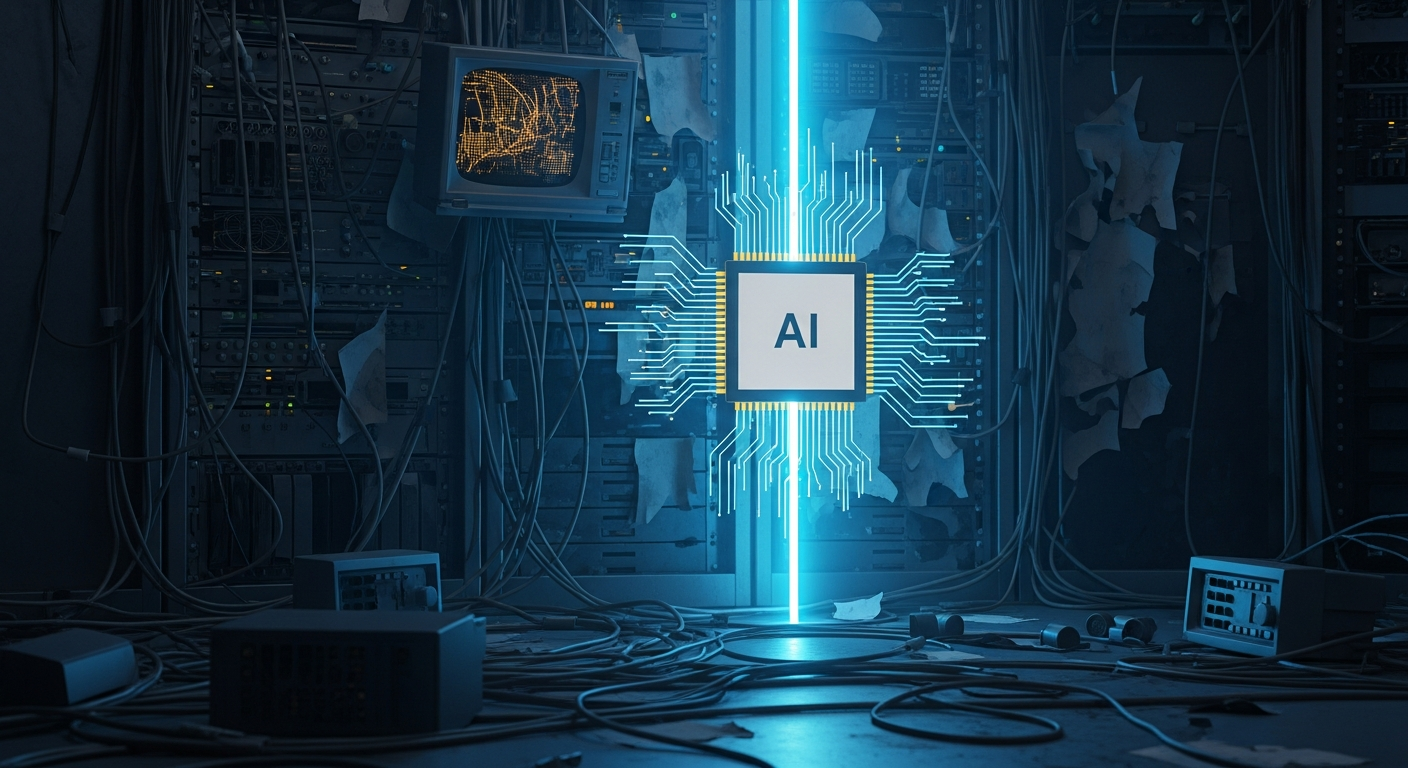
Why Your Current Marketing Stack Is Obsolete: The AI-First Imperative for 2024
The digital landscape in India is evolving at an unprecedented pace. What worked yesterday in marketing is merely a baseline today, and what's effective today will be outdated tomorrow. As a visionary leader at Talkbeyond.blog, I've witnessed firsthand the seismic shifts driven by technology. The most profound of these? The undeniable, transformative power of Artificial Intelligence.
For tech-savvy business owners, startup founders, digital marketers, and C-level executives across India, a critical question looms: Is your current marketing stack equipped for 2024? The stark reality is that for many, the answer is a resounding no. Traditional marketing automation tools, disconnected CRMs, and manual processes are no longer just inefficient; they are actively hindering growth. The future isn't just about integrating AI; it's about building an AI-first business strategy from the ground up. This isn't an upgrade; it's a revolution.
Join us as we dissect why your current setup is obsolete and unveil the imperative of an AI-first approach to redefine marketing, drive exponential growth, and solidify your competitive edge in the dynamic Indian market.
Key Takeaways:
- Obsolete Stacks Fail: Traditional marketing tools cannot meet modern consumer demands for hyper-personalization and real-time engagement.
- AI-First Imperative: Shifting to an AI-centric approach is critical for future-proofing your business and achieving scalable growth.
- Predictive Power: AI enables unparalleled predictive analytics and hyper-targeting, optimizing every rupee of your marketing spend.
- Automated Excellence: Leverage AI for intelligent marketing automation, from content creation to customer service, enhancing efficiency.
- CX Revolution: Conversational AI delivers superior, 24/7 customer experiences, a non-negotiable in today's competitive landscape.
- Indian Opportunity: India's unique market offers immense potential for businesses adopting AI to leapfrog competitors and scale rapidly.
The Shifting Sands of Consumer Expectation: Why Old Stacks Fail
In 2024, the Indian consumer is more informed, more connected, and more demanding than ever before. They expect seamless, personalized experiences across every touchpoint. Your legacy marketing stack, designed for a bygone era of mass communication, simply cannot keep pace. This gap between expectation and capability is where businesses lose market share and customer loyalty.
Beyond Personalization: Hyper-Individualization with AI
Remember the early days of "personalization" – adding a customer's name to an email? That's quaint now. Today, consumers expect brands to anticipate their needs, understand their context, and deliver truly relevant content and offers. Your existing tools might segment audiences, but can they hyper-individualize at scale?
Example: Consider streaming giants like Netflix or e-commerce platforms like Amazon India. Their recommendation engines, powered by sophisticated AI and ML algorithms, don't just suggest popular items; they predict what *you* specifically will love, based on your unique viewing or purchase history, browsing patterns, and even the time of day. This level of tailored experience is impossible without an AI-first approach. Generic email blasts or blanket promotions, a staple of obsolete marketing technology, now feel intrusive and irrelevant.
Real-Time Engagement: The Need for Speed and Context
The modern consumer journey is non-linear and often instantaneous. A query on social media, a question on your website, or a complaint via chat – each demands a rapid, informed response. Delayed or inconsistent engagement is a death knell for customer satisfaction.
Example: Indian banking apps frequently employ AI-powered chatbots for instant customer service. Instead of waiting on hold, customers can get their queries resolved in seconds, whether it's checking account balances, initiating transactions, or blocking cards. This real-time, context-aware interaction elevates the customer experience far beyond what manual support or a static FAQ page can offer. An AI-first marketing stack enables this immediate, intelligent dialogue.
Deconstructing the Obsolete Marketing Stack
To understand the urgency of the AI-first imperative, we must first acknowledge the inherent weaknesses that render many traditional marketing stacks obsolete.
Data Silos and Disjointed Journeys
Most businesses operate with a patchwork of marketing tools: a CRM for customer data, an email marketing platform, a social media management tool, an analytics dashboard, and so on. The critical problem? These systems often don't talk to each other effectively. This creates data silos, leading to an incomplete, fragmented view of the customer.
Problem: Without a unified customer profile, a customer service interaction might not inform a subsequent marketing campaign, or an abandoned cart might not trigger a personalized follow-up. This disjointed customer journey leads to missed opportunities and a frustrating experience for the customer, eroding brand trust.
Solution (AI): An AI-first marketing stack breaks down these silos. AI and ML algorithms can ingest data from all sources, cleanse it, and create a singular, dynamic customer profile. This enables predictive analytics to anticipate needs, automate personalized communication, and optimize every stage of the customer lifecycle.
Manual Overload and Inefficient Resource Allocation
Traditional marketing often involves significant manual effort: setting up campaigns, analyzing data, creating content, segmenting audiences, and reporting. This isn't just time-consuming; it's prone to human error and limits scalability.
Problem: Human-intensive tasks divert valuable resources from strategic initiatives. Furthermore, without AI's analytical prowess, marketing spend might be misallocated, targeting the wrong segments or using ineffective channels, resulting in wasted ad spend and suboptimal ROI.
Solution (AI): AI-driven marketing automation liberates teams from repetitive tasks. From automated content generation and A/B testing to programmatic advertising optimization and lead scoring, AI significantly boosts efficiency. This allows marketers to focus on strategy, creativity, and deeper customer insights, transforming marketing with AI.
The AI-First Imperative: Building Tomorrow's Growth Engine
Embracing an AI-first strategy isn't just about fixing problems; it's about unlocking unprecedented opportunities for business growth. It's about shifting from reactive marketing to proactive, predictive, and precisely targeted engagement.
Predictive Analytics & Hyper-Targeting
- How: AI identifies high-value customer segments, predicts future purchasing behavior, anticipates churn risk, and optimizes ad spend by dynamically allocating budgets to channels and creatives with the highest predicted ROI.
- Example: E-commerce giants like Flipkart and Myntra leverage AI for personalized product discovery, dynamic pricing based on demand and competitor analysis, and targeted promotions. This hyper-targeting ensures that marketing messages reach the right person, at the right time, with the right offer, drastically improving conversion rates and customer lifetime value.
AI-Powered Content Creation & Optimization
- How: AI tools can generate compelling ad copy, blog outlines, social media posts, and email subject lines. More importantly, AI analyzes content performance in real-time, suggesting optimal headlines, images, and CTAs to maximize engagement and conversions.
- Example: Digital marketing agencies in India are increasingly using AI to assist with localized ad copy for diverse regional audiences, ensuring cultural relevance and linguistic accuracy at scale. This not only saves time but also significantly improves campaign effectiveness, leading to better business development outcomes.
Intelligent Marketing Automation & Workflow Orchestration
- How: AI automates lead nurturing sequences, triggers personalized communications based on real-time customer behavior, and orchestrates complex multi-channel campaigns seamlessly. It learns and adapts, continuously optimizing workflows for maximum impact.
- Example: Enterprises across India, from IT services to manufacturing, are adopting platforms like Salesforce Einstein, which uses AI to automate sales forecasting, personalize customer service interactions, and optimize marketing campaign flows. This ensures a cohesive customer journey, from initial contact to post-purchase support.
Enhanced Customer Experience (CX) with Conversational AI
- How: AI-powered chatbots and voice assistants provide instant answers to queries, guide users through processes, and even handle complex transactions, freeing up human agents for more intricate issues. They learn from every interaction, becoming smarter over time.
- Example: HDFC Bank's "Eva" chatbot, or Axis Bank's "Axis Aha!", are prime examples of how Indian financial institutions are leveraging conversational AI to offer round-the-clock support, reducing wait times and improving resolution rates, thereby significantly enhancing the AI-driven customer experience.
Navigating the AI Transformation in the Indian Context
India presents a unique confluence of opportunities and challenges for AI adoption in marketing. Its vast, diverse population, rapidly digitizing economy, and burgeoning tech talent pool make it fertile ground for innovation.
Opportunities for Indian Businesses
- Cost Efficiency: AI can dramatically reduce operational marketing costs, a significant advantage for budget-conscious SMEs and startups.
- Reaching Diverse Audiences: AI can help segment and personalize content for India's multilingual and multicultural population more effectively than traditional methods.
- Leapfrogging Competitors: Early adopters of an AI-first strategy can gain a substantial competitive advantage, setting new benchmarks for customer engagement and operational efficiency.
- Scalability: AI-driven platforms offer unparalleled scalability, enabling businesses to grow their marketing efforts without proportionally increasing human resources.
Challenges and How to Overcome Them
- Talent Gap: A shortage of AI/ML specialists and data scientists can hinder implementation. Solution: Invest in upskilling existing marketing teams, partner with AI service providers, and leverage ready-to-use AI platforms.
- Data Privacy & Security: With India's evolving digital data protection bill, ensuring ethical AI use and robust data security is paramount. Solution: Implement strong data governance frameworks, ensure compliance, and choose AI solutions with built-in privacy features.
- Integration Complexities: Integrating AI with existing legacy systems can be challenging. Solution: Adopt a phased implementation approach, starting with high-impact areas, and prioritize AI tools designed for seamless integration.
The message is clear: the era of the traditional marketing stack is over. For businesses in India aiming for sustainable growth and market leadership in 2024 and beyond, embracing an AI-first business strategy is no longer optional – it's an imperative. This transformation isn't just about adopting new tools; it's about fundamentally rethinking how you connect with customers, optimize operations, and drive revenue.
At Talkbeyond.blog, we believe in empowering you with the knowledge and strategies to navigate this exciting new frontier. The future of marketing is intelligent, automated, and deeply personalized. Are you ready to lead the charge?
Frequently Asked Questions (FAQ)
Q1: What are the immediate benefits of an AI-first marketing stack for Indian SMEs?
A1: Indian SMEs can immediately benefit from increased efficiency through task automation, improved customer targeting that optimizes ad spend, and enhanced customer service via chatbots, leading to higher conversion rates and better customer retention without needing a large marketing team. It democratizes sophisticated marketing capabilities.
Q2: How can businesses integrate AI into their existing marketing tools without a complete overhaul?
A2: Businesses can start by integrating AI point solutions into specific areas, such as using AI for content generation (e.g., ad copy, social media posts), predictive analytics for lead scoring within their CRM, or AI-powered chatbots for website support. Many modern marketing platforms offer AI modules that can be activated or integrated with minimal disruption, allowing for a phased transition to an AI-first marketing stack.
Q3: Is AI marketing only for large corporations, or can startups in India leverage it effectively?
A3: Absolutely not. AI marketing is highly accessible to startups and SMEs in India. Many AI tools are cloud-based, subscription-model, and scalable, making them affordable and easy to implement. Startups can leverage AI for competitive analysis, personalized outreach, automated customer support, and optimized ad campaigns to punch above their weight and accelerate growth, even with limited resources.
Q4: What are the key ethical considerations when implementing AI in marketing?
A4: Key ethical considerations include data privacy (ensuring compliance with regulations like India's Digital Personal Data Protection Bill), algorithmic bias (ensuring AI models don't perpetuate or amplify societal biases), transparency (being clear about AI's role in interactions), and accountability (establishing who is responsible for AI-driven decisions). Businesses must prioritize fair, transparent, and secure AI practices to build trust and avoid reputational damage.



COMMENTS
Loading comments...
Leave a Comment